
Long Term Thermal Energy Storage
Long-Term Heat Storage: Energy on Demand
Long-term heat storage captures, stores, and releases thermal energy over extended periods, making clean energy available when and where it is needed. NISO Energy explores heat storage systems that balance supply and demand, support renewable energy integration, and improve energy efficiency across industrial, remote, northern, and Arctic applications—especially where harsh environments require dependable energy on demand.
How it works?
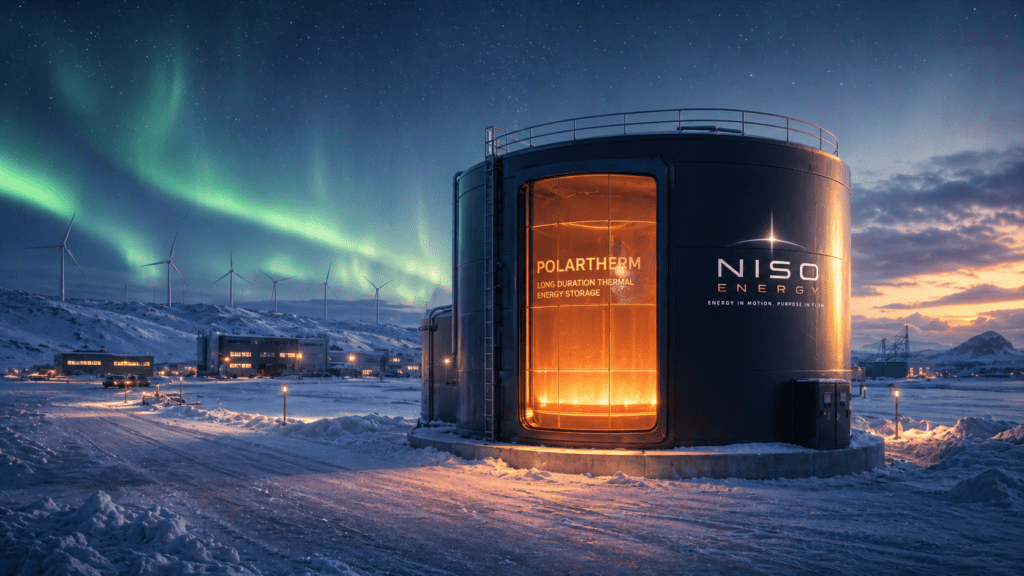
Excess Energy Storage
Excess energy storage converts surplus electricity into thermal energy for later use, helping optimize energy use during periods of peak production and shifting clean power to times of higher demand
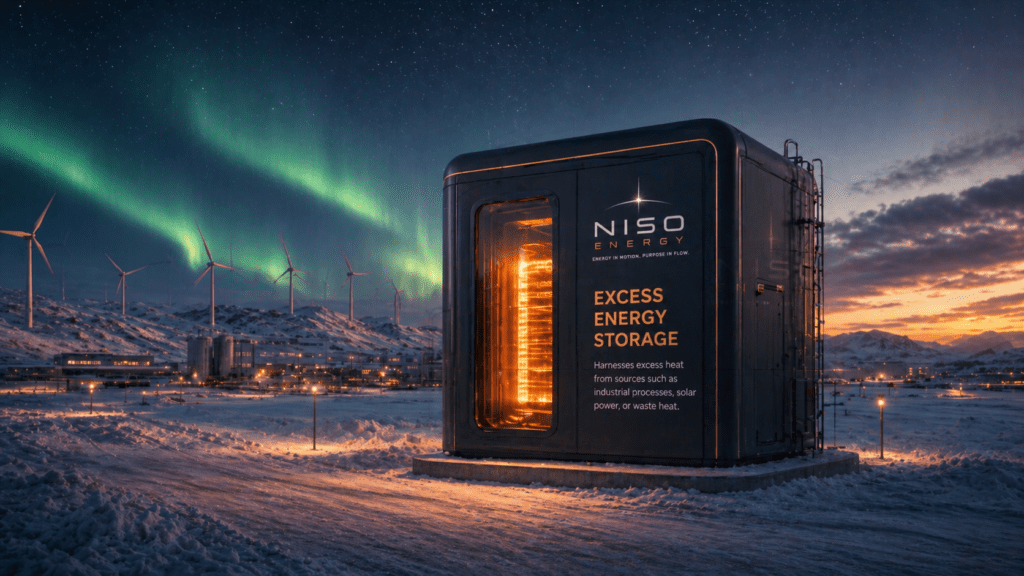
Heat Capture
Harnesses excess heat from sources such as industrial processes, solar power, or waste heat.
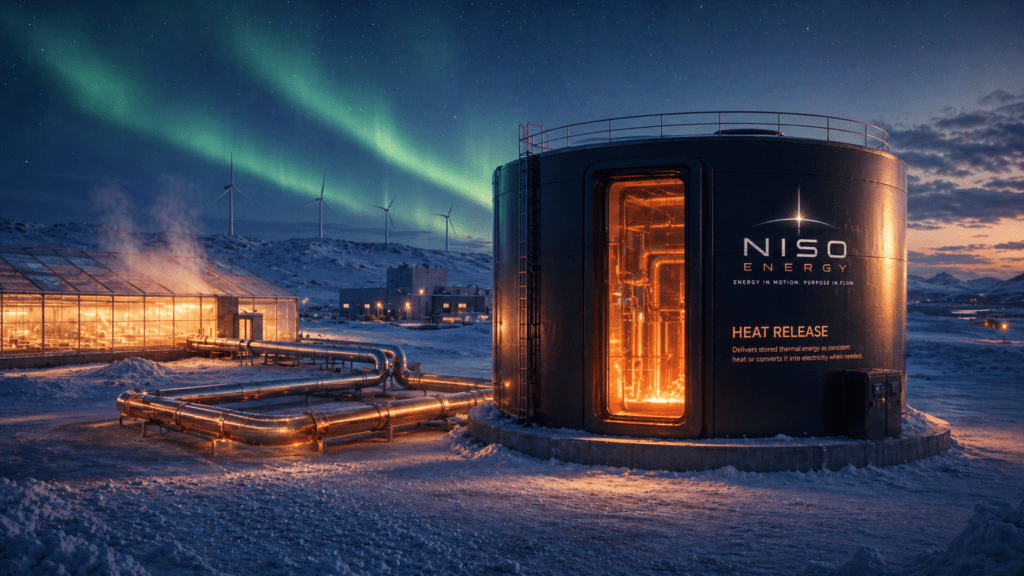
Heat Release
Heat release systems deliver stored thermal energy as consistent heat or convert it into electricity when needed, helping maintain continuous power, operational flexibility, and resilience across industrial, remote, northern, and Arctic applications.
WHY IT MATTERS
Renewable Integration:Stores surplus energy from solar, wind, and other renewable sources for use during low-generation periods, helping reduce dependence on fossil-fuel backup systems.
Energy Efficiency: Repurposes waste heat and optimizes thermal energy cycles across industrial, commercial, remote, and residential applications, reducing energy waste and improving system performance.
Reliability: Delivers stable heat or power during fluctuating conditions, supporting grid resilience, energy security, and dependable operation in harsh environments.
Real-World Impact
Industrial Applications: Reduces energy costs and emissions by recovering and reusing waste heat from energy-intensive sectors such as steel, cement, chemical manufacturing, mining, and heavy industry.
Renewable Energy Systems: mproves renewable energy reliability by storing surplus energy from solar, wind, and other clean sources for use when generation is low, intermittent, or unavailable.
Residential and Commercial Heating: Provides efficient, clean, and cost-effective heating support for buildings, campuses, remote facilities, and communities—helping reduce energy waste and dependence on fossil-fuel heating systems.
Key Technologies
Thermal Batteries: Compact, scalable heat-storage systems that use advanced materials to store and release thermal energy efficiently across industrial, commercial, remote, and renewable applications.
Phase-Change Materials (PCMs): Store and discharge large amounts of heat during phase transitions, improving temperature stability, energy density, and system performance.
Sand/Stone Heat Storage Systems: Use low-cost, abundant, and thermally stable media to store heat at elevated temperatures, making them well suited for industrial heat recovery, renewable energy integration, and long-duration energy storage.
Challenges to Overcome
Efficiency: Enhancing heat retention while minimizing losses during storage and transfer processes.
Material Innovation: Developing robust, cost-effective materials with superior heat storage capacities and longevity.
System Scalability: Creating solutions that seamlessly scale from small residential units to large industrial operations.